
What Makes an Online Casino Safe and Reliable

Route recap
A casino is safe when its claims can be checked against a record someone else controls. That is the whole test. A licence number in a footer means nothing until it resolves in a regulator’s public register; an “SSL secured” badge means nothing until you know which protocol version is running; “provably fair” means nothing until an independent lab has reviewed the source code and re-audited it. Verifiable evidence and concrete changes for the attentive player come from the mechanisms outlined below.
Licensing Is a Registry Lookup, Not a Logo
A licence creates a public record. The Malta Gaming Authority’s Licensee Register can be searched by licensee company name, authorisation status, the actual casino URL, or gaming service type. That last field matters. Search the casino’s own domain in the MGA Licensee Register. A logo is an image file. A register entry is a government record tied to a specific URL.
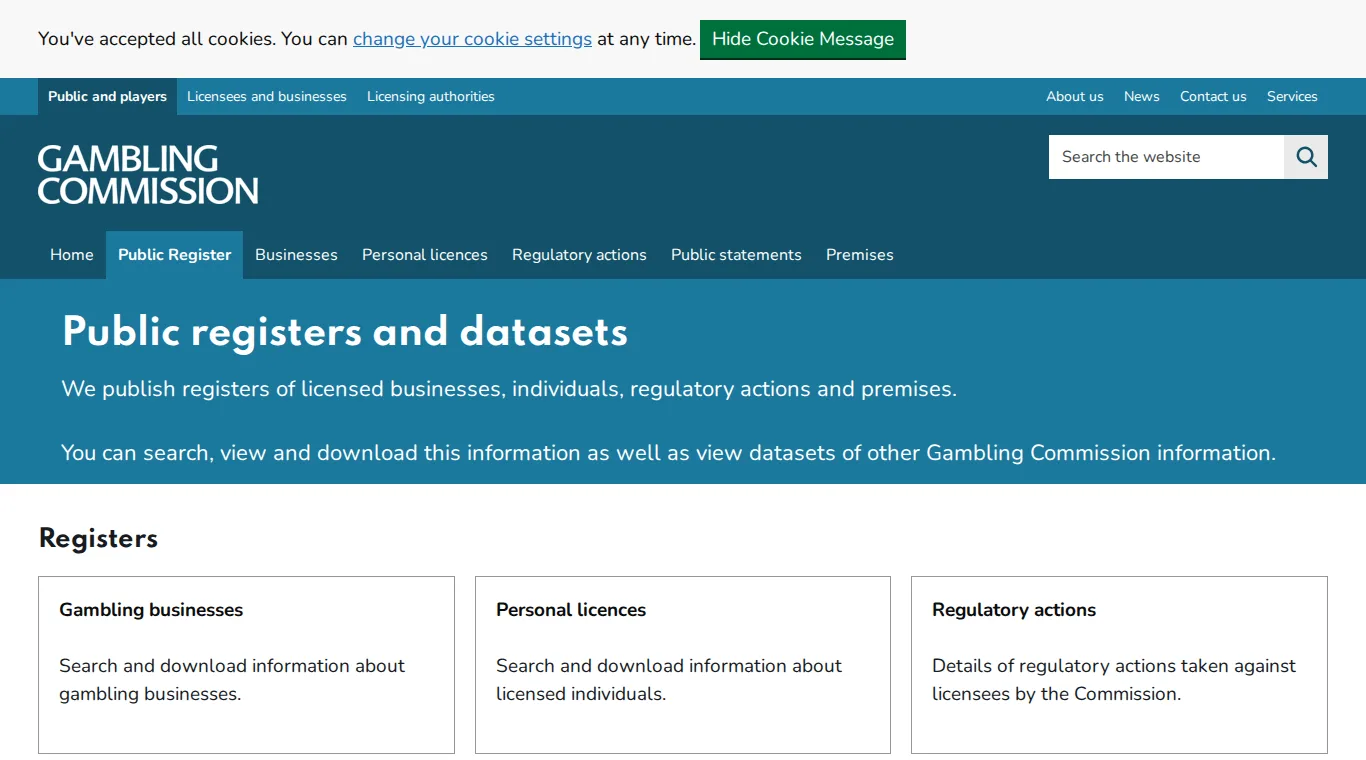
The UK Gambling Commission runs the same logic through its Public Register, which lets anyone search and download the status of every operating, personal, and premises licence, plus any regulatory or enforcement action taken against a licensee. Enforcement history is the part most players never check and the part that carries the most information. A licence in good standing and a licence with a recent penalty attached are different propositions, and the register shows both.
Kahnawà:ke’s licensing structure clarifies why some sites display a certification logo that behaves like a button. The Kahnawà:ke Gaming Commission issues five distinct categories. These are: an Interactive Gaming Licence held exclusively by Mohawk Internet Technologies since 1999 for the hosting facility itself; Client Provider Authorizations for operators offering games from that facility, unlimited in number; Key Person Licences for individual managers and owners; Casino Software Provider Authorizations for suppliers who license to third parties without operating directly; and a Live Dealer Studio Authorization. All CPA and CSPA holders and their URLs are listed publicly. The certification logo on a Kahnawà:ke-licensed site queries the Commission’s records in real time when clicked, confirming current licence validity.
Ontario shows what a registry looks like when it is young and growing. The province’s regulated market, overseen by AGCO and operated commercially through iGaming Ontario, demonstrates this scale clearly.
| Metric | Value |
| Licensed operators (early 2026) | 48 active |
| Approved real-money sites (early 2026) | 80+ |
| Total wagers, calendar-year 2025 | ~$98.3 billion (+26% year-on-year) |
| Gross gaming revenue, calendar-year 2025 | ~$4 billion (+34% year-on-year) |
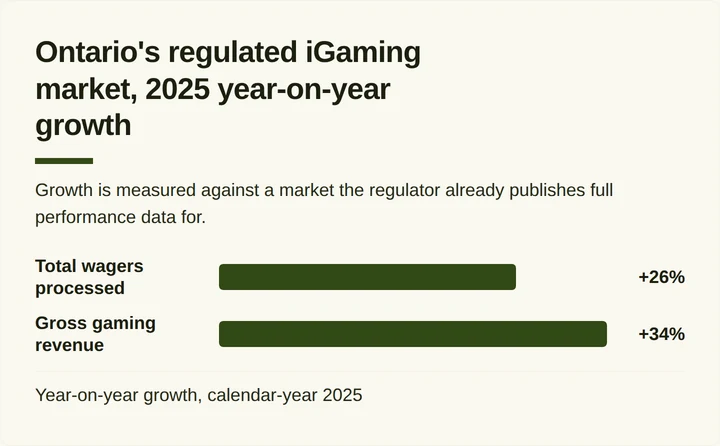
A market large enough to publish this performance data is a market where the regulator has something concrete to measure against.
The measurable consequence of all this is channelization. An Ipsos study commissioned by iGaming Ontario and AGCO showed how regulatory oversight shifted player behavior by the market’s fourth year.
| Player Site Choice | Current | Previous Year |
| Regulated sites | 91.1% | 83.7% |
| Unregulated sites | 8.9% | 16.3% |
This 7.4-percentage-point shift illustrates what licensing regimes accomplish in practice. Offshore operators do not disappear. The default simply moves toward regulated sites, and that shift is what the register is for.
Encryption Claims Are Vague Because the Rules Are
GDPR Article 32 does not name an encryption algorithm or a protocol version. It requires “appropriate technical and organisational measures,” explicitly including “the pseudonymisation and encryption of personal data,” scaled to risk, the state of the art, and the cost of implementation, plus a documented process for regularly testing and evaluating those measures. The regulation is deliberately non-prescriptive, so “GDPR-compliant encryption” on a casino page provides minimal verification on its own.
Industry and regulatory guidance provide the concrete standards. TLS 1.2 is treated as the current minimum acceptable protocol for encrypting personal and payment data in transit, with TLS 1.3 recommended for new deployments. Data at rest is typically expected to use AES-256. SSL terminology matters. The protocol was deprecated years ago, and a site still advertising “SSL encryption” runs outdated copy or outdated infrastructure. Neither is reassuring.
The protocol version is checkable from the browser, and the difference between these standards is not marketing. The gap between GDPR’s “appropriate measures” language and a fixed standard leaves room for how operators handle data internally, which is exactly what the mandatory documented testing process is meant to cover.
RNG Certification Is a Code Review Plus a Re-Audit
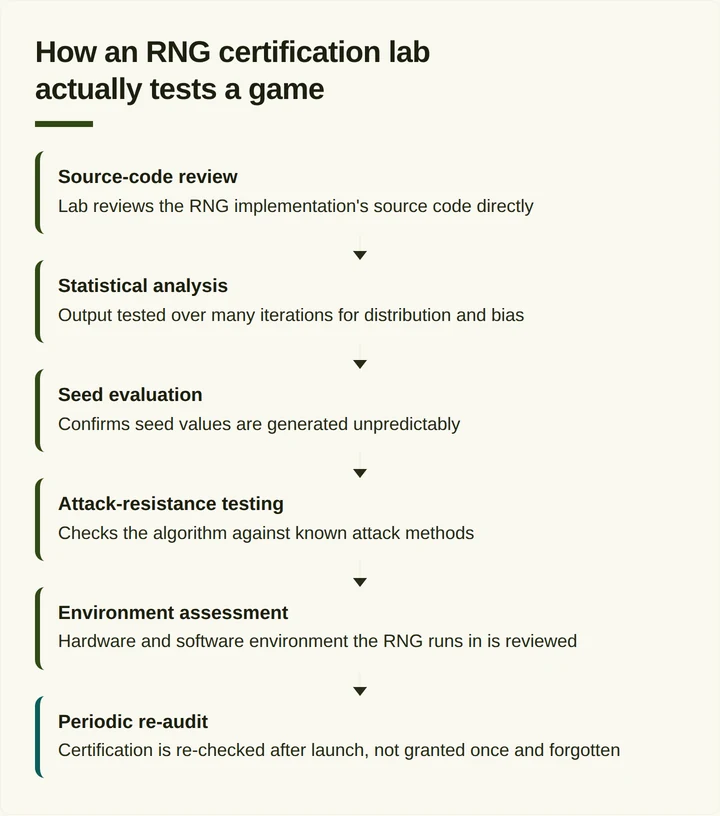
“Random number generator” describes a component. It says nothing on its own about a specific game’s fairness — the certification process is what closes that gap. eCOGRA’s published methodology includes multiple distinct steps: a source-code review of the RNG implementation; extensive statistical analysis of RNG output over many iterations to check distribution and detect bias; evaluation of how seed values are generated, to confirm they are unpredictable; testing of the algorithm’s resistance to known attacks; assessment of the hardware and software environment the RNG runs in; and periodic re-audits that continue after initial certification. The re-audit is the load-bearing part. Software changes; a certificate from three years ago covers only three-year-old code.
iTech Labs and Gaming Laboratories International both test for statistical randomness, uniform distribution, unpredictability and independence of outcomes, and correct integration of the certified RNG into the actual game software. That last item is the one players consistently misunderstand. Certifying an RNG algorithm in isolation differs from certifying that the deployed game matches its declared mathematical model, including its return to player. Integration testing is what confirms the game you are playing is the game that was certified. iTech Labs holds a partnership with GLI giving joint clients access to a shared global testing network.
The technical standard most regulators reference for online casino platforms is GLI-19, “Standards for Interactive Gaming Systems.” It covers the interactive gaming system generally, platform and system requirements, RNG requirements, and game requirements. Related standards include GLI-11 (game requirements) and GLI-33 (sports wagering). The separation matters because a sportsbook and a casino platform are certified against different documents.
On RTP, the UK Gambling Commission’s guidance is the authoritative source for how the figure is calculated and monitored. Designed RTP differs from actual RTP, measured over given turnover periods. The Commission monitors actual returns on rolling cycles.
| Example | Designed RTP | Actual RTP | Window |
| Game | 91.68% | 90.42% | Single monitoring cycle |
| Typical slots (indicative, non-regulatory) | 94–98% | Varies | Secondary-source comparison |
Widely repeated ranges for online slots versus land-based machines come from secondary sources and should be treated as indicative, not regulatory data. What is checkable is comparing designed versus actual RTP on a monitoring schedule.
Payment Security Is About Scope, Not Slogans
PCI DSS classifies merchants into four levels by annual card transaction volume and audit requirements.
| Level | Annual Transactions | Audit Type |
| 1 | 6+ million | External Report on Compliance (mandatory) |
| 2 | 1–6 million | Self-Assessment Questionnaire eligible |
| 3 | 20,000–1 million e-commerce | Self-Assessment Questionnaire eligible |
| 4 | Under 20,000 | Self-Assessment Questionnaire eligible |
Only the top tier carries a mandatory external audit; the lower tiers are generally eligible to self-certify instead. A high-volume operator sitting at Level 1 is held to a materially stronger assurance standard than one that only ever fills out a questionnaire.
Tokenization is the mechanism that determines which questionnaire applies. SAQ A, the lightest of the PCI DSS self-assessment types, applies only to merchants that have fully outsourced all cardholder-data handling to PCI-DSS-compliant third parties, such as a hosted payment page. If the casino’s own systems never receive or store the raw card number, most of the PCI DSS technical burden shifts to the payment processor and the casino qualifies for reduced SAQ-A assessment. “PCI-compliant payment processing” operationally means routing the card number to and handling it through compliant third parties.
Fund segregation is a separate question, and the UK Gambling Commission’s customer-funds protection rating system makes it checkable. Operators disclose one of three tiers:
| Protection Tier | Mechanism | Insolvency Coverage |
| Not protected | General business assets | No; treated as creditor claim |
| Medium | Quistclose trust or insurance | Segregated with distribution mechanism, no guarantee |
| High | Independent trust account | Full segregation, verified by external auditor |
“Not protected” operators must remind customers of that status and the amount held every six months; customers must acknowledge this before gambling. A player can look up which tier their operator discloses. “Your funds are safe” cannot be looked up.
Transparent Terms Have an Enforcement Backstop
The UK Gambling Commission’s guidance on fair and transparent terms states that it does not expect bonus conditions such as wagering requirements to encourage excessive play, and the Commission has previously found operator terms and conditions difficult to understand. Updated bonus-advertising rules now require every UKGC-licensed operator to show the full headline terms of a bonus before a player can claim it—the wagering requirement, the maximum bet allowed while wagering, which games count toward it, the expiry window, and any maximum cashout cap. The disclosure has to happen before the claim, not on a separate terms page afterward.
The Commission’s fair-terms framework was shaped in part by the UK Competition and Markets Authority’s 2018 enforcement action against online gambling operators over unfair promotional terms and withdrawal restrictions. Current fair-terms expectations trace back to that enforcement case rather than to voluntary industry practice. The origin determines how much weight the rules carry when an operator is deciding whether to comply.
For a player, the practical test is whether the terms are visible at the moment of decision. A wagering requirement disclosed on a page you have to navigate to after claiming is technically disclosed and functionally buried. This timing rule targets exactly that gap, and it is the clearest recent example of a regulator moving from “must be available” to “must be shown.”
Support Is a Required Feature, Not a Speed Benchmark
No UK Gambling Commission, MGA, Kahnawà:ke, or AGCO/iGaming Ontario document was found to specify a mandated customer-support response-time SLA for licensed operators. The UKGC’s Licence Conditions and Codes of Practice require licensees to have access to advice and to maintain complaints procedures, but response speed is not a licensing metric the way RTP monitoring or fund segregation are. Any article quoting a specific “under two minutes” or “24-hour” figure as a regulatory requirement is inventing it.
The one number that circulates comes from a vendor. LiveChat’s published Customer Service Report, based on an analysis of over 87 billion website visits, 2 billion chats and 12 million support tickets across its client base, found a typical first live-chat response time of 35 seconds. That is a live-chat software company reporting on its own aggregate customer base across all industries. It is not a gambling-regulator standard and not an audited casino-specific benchmark. It is useful as cross-industry context and misleading as a casino comparison.
What a regulator actually requires is process — access to advice and a working complaints procedure. Response time itself is a service-quality question, and that is where operators compete and differentiate themselves.
What the Mechanisms Add Up To
Each mechanism above answers a different question, and conflating them is how safety claims become marketing. A licence register answers whether the operator is authorized and whether it has been penalized. RNG certification answers whether the game matches its declared mathematics, and the re-audit schedule answers whether that is still true. PCI DSS scope answers where the card number goes. Fund-segregation tiers answer what happens to your balance if the company fails. Fair-terms rules answer whether the bonus conditions were visible before you claimed.
The structural shift visible across these regimes is toward disclosure at the point of decision. Ontario publishes market performance and channelization data. The UKGC requires fund-protection status to be acknowledged before play and bonus terms to be shown before claim. Kahnawà:ke makes its licence logo query a live record. The direction is consistent: regulators are moving verification from the operator’s marketing layer to a public record the player can reach directly.
That is what changes for the player. The question is no longer whether a casino says it is safe, but whether each specific claim resolves to something outside the casino’s own control. Where it does, the claim is worth something. Where it does not, it is a badge.
FAQ
How can a casino’s licence be verified? Search the regulator’s own register, not the casino’s site. The MGA Licensee Register accepts the casino’s URL directly. The UKGC Public Register lets you download licence status and any enforcement actions. Kahnawà:ke lists all CPA and CSPA holders and their URLs publicly, and its certification logo queries the Commission’s records in real time when clicked.
Does GDPR require a specific encryption standard? No. The regulation requires “appropriate measures” scaled to risk, but does not name an algorithm or protocol. Industry guidance treats TLS 1.2 as the minimum for data in transit, TLS 1.3 as recommended for new deployments, and AES-256 for data at rest.
What does RNG certification actually verify? eCOGRA’s process includes source-code review, statistical analysis of output over many iterations, evaluation of seed generation, resistance testing against known attacks, assessment of the hardware and software environment, and periodic re-audits. iTech Labs and GLI verify that the deployed game matches its declared mathematical model, including RTP, by testing the complete integration.
Are player funds protected if an operator becomes insolvent? It depends on the operator’s disclosed fund-protection tier. Under the UKGC system, “Not protected” means funds are general business assets. A medium tier uses a Quistclose trust or insurance arrangement. A high tier uses an independent trust account verified by an external auditor. Operators rated “Not protected” must remind customers of that status periodically as required by regulation.
What is the difference between PCI DSS Level 1 and SAQ A? Level 1 merchants process 6 million or more card transactions per year and require an external Report on Compliance audit. SAQ A is the lightest self-assessment and applies only where all cardholder-data handling is fully outsourced to PCI-compliant third parties, such as a hosted payment page. Tokenization allows a casino to qualify for the lighter SAQ A assessment.
Do regulators require a specific customer-support response time? No. No UKGC, MGA, Kahnawà:ke, or AGCO/iGaming Ontario document specifies a mandated response-time SLA. The LCCP requires access to advice and a complaints procedure, not a speed benchmark. The commonly cited 35-second figure comes from LiveChat’s own vendor report covering all industries, not from a gambling regulator.
Why does the UKGC require bonus terms to be shown before claiming? The Commission’s fair-terms guidance states it does not expect wagering requirements to encourage excessive play, and it has found operator terms difficult to understand. The 2026 bonus-advertising rules require the full headline terms, including wagering requirement, maximum bet, eligible games, expiry window, and cashout cap, to be shown before the claim. The framework traces back to the CMA’s 2018 enforcement action over unfair promotional terms.